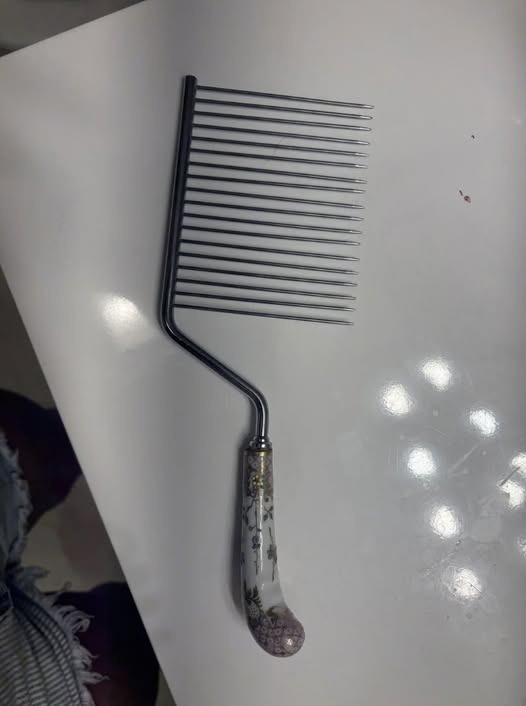
From the 1940s through the 1970s, angel food cake reigned as the quintessential American dessert:
- Light enough after a Sunday roast
- Elegant enough for bridge club
- Affordable enough for everyday joy
Baked in tall tube pans, often served with fresh strawberries and a dollop of whipped cream, it was the democratized delicacy—fancy without pretense.
And the cutter? It sat in kitchen drawers alongside Jell-O molds and Pyrex casseroles—a quiet promise that even simple things deserve to be done well.
🧁 How to Use (and Honor) the Cutter Today
If you’re lucky enough to own one—or find one at a thrift store—here’s how to use it like the grandmothers did:
- Cool the cake completely (inverted on its pan legs, as tradition holds).
- Run a thin knife around the edges to loosen.
- Place the cutter on top, tines aligned vertically.
- Press straight down—no sawing!—until tines reach the base.
- Lift gently—the slice should release cleanly.
No crumbs. No collapse. Just cloud-like perfection.
❤️ More Than a Tool—A Legacy
That rake-like comb isn’t just metal—it’s a reminder:
- That gentleness matters
- That details reflect care
- That some traditions are worth preserving
In a world of electric slicers and disposable everything, the angel food cake cutter stands as a quiet rebellion: slow, intentional, and kind to what it touches.
So if you bake an angel food cake this week, honor it. Don’t grab a chef’s knife. Find that old comb-shaped cutter—or mimic its spirit with two forks or a serrated knife used with feather-light pressure.
Because some cakes aren’t just eaten.
